

Winning work is one thing. Keeping that work organized from the first bid request to the first day of execution is another.
For many construction companies, bid tracking still lives across spreadsheets, inboxes, proposal documents, shared folders and follow-up conversations. Estimators may have one view of the pipeline, project managers may only get involved once the job is awarded and operations teams may be waiting for handoff details that are buried in emails or scattered across multiple systems.
That creates a familiar problem. The bid may be tracked in one place, the proposal may be created somewhere else and the awarded project may need to be manually recreated again before the work can actually begin. By the time the job moves from estimating into execution, important details can already be missing, duplicated or out of date.
A better Bid & Project Tracking workflow helps teams manage opportunities from early bid intake through project handoff. It gives the estimating team a central place to track bid activity, helps standardize proposal submission and creates a smoother transition when a bid becomes active work.
Why Bid Tracking Becomes Hard to Manage
Bid tracking usually starts simple.
A request comes in. Someone adds it to a spreadsheet, enters it into a CRM or makes a note to follow up later. The estimator gathers pricing, reviews the scope, builds the proposal and sends it to the client. Once the bid is submitted, someone updates the status. If the job is won, the team creates the project and passes the details over to operations.
That process can work when the volume is low. But as the number of opportunities grows, the manual steps become harder to manage. Bid details start to live in too many places. Proposal information gets entered more than once. Follow-ups depend on memory. Leadership may not have a clear view of what is being estimated, what has already been submitted and what is likely to become active work.
The issue is not just tracking the bid. The real issue is keeping the bid connected to the work that comes after it.
When estimating and operations are disconnected, project teams can start with incomplete information. Scope details, pricing assumptions, exclusions, terms, customer notes and internal handoff requirements may not move cleanly into the next stage. This creates extra admin work at the exact moment the team should be preparing to execute.
That is where a structured workflow can help.
A Better Way to Manage Bids and Project Handoffs
A connected Bid & Project Tracking workflow starts by giving every opportunity a clear place to live.
Instead of relying on spreadsheets or inboxes, bid opportunities are created and tracked in an Estimating Pipeline Board. Each opportunity becomes a trackable card, giving the team a live view of where it stands. This creates a central pipeline where estimators, managers and leadership can see which opportunities are new, which ones are being priced, which ones have been submitted and which ones have been won or lost.
The manual starting point matters. A team member can create the bid request in the pipeline when the opportunity comes in. From there, the card can move through the estimating process as the team gathers information, prepares pricing, reviews scope and gets ready to submit the quote.
When the quote is ready, the team can launch the Bid Submission Form directly from the board card. This is where the proposal details are captured in a structured way, including pricing, terms and conditions and exclusions. Because the form is connected to the board card, information from the opportunity can be carried into the proposal process instead of being re-entered manually.
Once the Bid Submission Form is submitted, the opportunity can move to “Bid Submitted.” This keeps the pipeline accurate without relying on someone to remember to update a separate spreadsheet or manually notify the rest of the team.
If the bid is won, the workflow continues. The opportunity can create a project in Ontraccr and move into the Active Construction Board, helping the team transition from estimating into execution without starting over.
Example: How the Workflow Works
A Bid & Project Tracking workflow usually begins when a new opportunity comes in from a client, tender portal, email, referral or repeat customer.
Instead of entering the opportunity into a spreadsheet, the team creates a bid request in the Estimating Pipeline Board. The card becomes the central record for that opportunity. It can hold the key information the team needs to understand the work, such as the customer, project name, bid due date, assigned estimator, estimated value, scope notes, priority and any internal comments or attachments.
As the opportunity moves through the pipeline, the board helps the team understand where the bid stands. A company might have stages for new opportunities, estimating, internal review, ready to submit, submitted, won or lost. The exact status structure can be customized, but the purpose is the same - make the bid visible before it becomes urgent.
This is where the workflow starts to replace the constant back-and-forth that often happens around bids. Instead of asking whether pricing is ready, who owns the estimate or whether the quote has gone out, the team can look at the board and see the current stage of the opportunity.
When the proposal is ready, the team launches the Bid Submission Form from the board card. This form gives the company a consistent way to capture the proposal details that matter. It can include the price, terms and conditions, exclusions and other company-specific information needed to generate a professional submission.
Once the form is submitted, the opportunity moves forward automatically. Instead of separately updating the bid tracker, saving a proposal somewhere else and telling the team the bid went out, the submission itself becomes the event that updates the pipeline.
After submission, the opportunity can continue to be tracked until the customer makes a decision. If the bid is lost, it can be marked accordingly so the pipeline stays clean. If the bid is won, the workflow can create the project and move the opportunity into the Active Construction Board, where the operations team can begin managing the work as an active project.
This creates a much cleaner handoff. The bid does not disappear into a folder or sit in a spreadsheet after award. It becomes the starting point for the project.
Manual Process vs. Connected Workflow
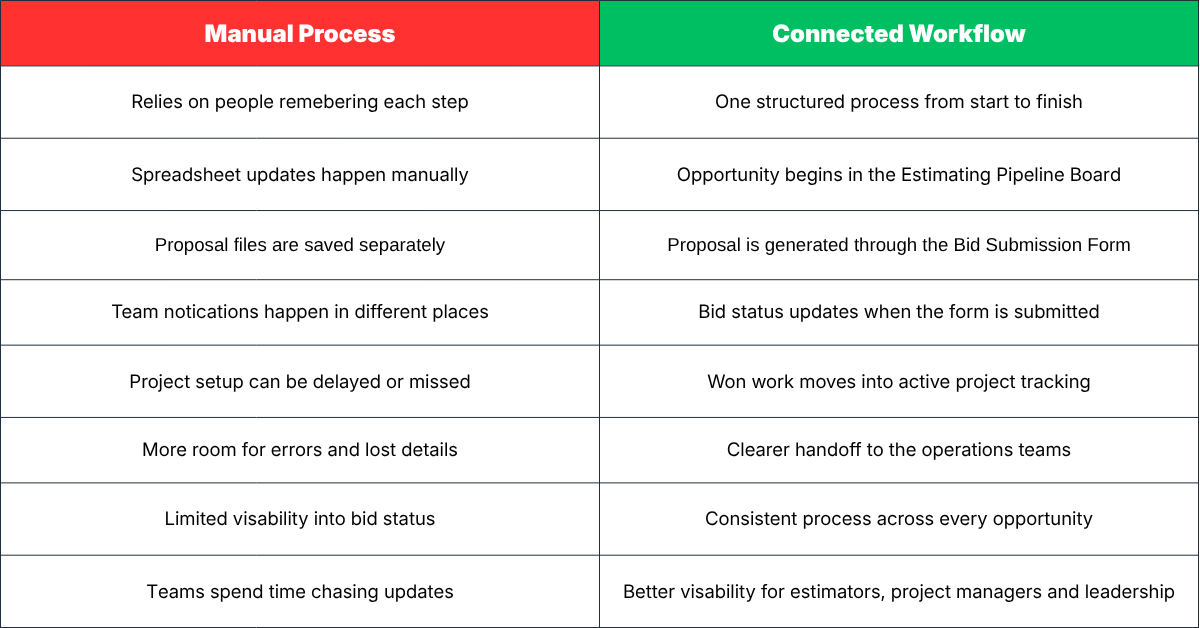
Why This Matters for Construction Teams
The estimating process has a direct impact on operations.
If a bid is tracked poorly, the problem may not show up until after the job is awarded. The project team may be missing important scope details. The customer may expect terms that were not clearly shared internally. The estimator may need to answer the same questions again. Operations may have to rebuild the project record manually before the team can start planning the work.
That slows down momentum right when the company should be preparing to execute.
A connected Bid & Project Tracking workflow helps reduce those issues by giving the process more structure. Bid opportunities are centralized in one pipeline. Proposal information is captured in a standard format. Status updates are easier to keep accurate. Won work can move into active project tracking without requiring the team to manually recreate everything from scratch.
This is especially useful for companies managing multiple estimators, divisions, project types, or bid sources. The more opportunities a company has in motion, the more important it becomes to know what is active, what has been submitted and what is ready to turn into work.
Who This Workflow Is For
A Bid & Project Tracking workflow is useful for construction companies that need better visibility from opportunity intake to project execution.
General contractors can use it to manage multiple bid opportunities across different project types. Specialty contractors can use it to track frequent proposal activity and keep submitted bids organized. Estimating teams can use it as a shared pipeline so everyone understands what is being worked on and what still needs attention.
It is also helpful for operations teams. When a job is won, the handoff from estimating to project management is often where details get lost. A connected workflow helps reduce that gap by keeping the opportunity tied to the next stage of work.
Leadership teams can also benefit from the visibility. Instead of relying on separate updates from each estimator, they can see the overall pipeline and understand where opportunities stand.
Every company may manage bids differently, but the goal is usually the same - track the opportunity once, keep the information connected and make the transition into active work smoother.
Customizing the Workflow
Not every estimating process needs the same stages or proposal structure.
Some teams may need a simple pipeline with only a few statuses. Others may need more detailed stages for pre-qualification, estimating, internal review, submitted, won and lost opportunities. The workflow can be customized around the way the company already works instead of forcing every team into the same process.
For example, a company could adjust its pipeline statuses to match its estimating workflow. A team that handles a high volume of smaller jobs may want a simpler process, while a company bidding larger projects may need additional review stages before submission.
The proposal template can also be modified to align with company standards. This is useful when teams want consistent terms, exclusions, formatting and branding across client-facing proposals. Instead of each estimator building proposals differently, the Bid Submission Form can help create a more repeatable structure.
Some companies may also want to add forecasting or CRM-style fields. This could help track expected award dates, estimated project value, probability of winning or other information that gives leadership a better view of future work.
The point is not to make bid tracking more complicated. The point is to give the process enough structure that opportunities are easier to manage and handoffs are easier to repeat.
Where Automation Helps Most
The most useful automation in bid tracking is not always complicated.
It is usually the small handoffs that create the most friction. When a proposal is ready, someone needs to generate the document. When the bid is submitted, someone needs to update the pipeline. When the bid is won, someone needs to create the project and move the work into the next stage.
Those steps are easy to miss when the team is busy.
A connected workflow reduces the number of places where the process depends on memory. The Bid Submission Form can be launched directly from the board card. Details from the card can map into the form. Submitting the form can move the opportunity to “Bid Submitted.” Moving the opportunity to “Won” can create the project and move the work into the Active Construction Board.
These automations do not replace the estimator or project manager. They simply make the process easier to repeat.
That matters because bid tracking is not just about recording opportunities. It is about keeping the right information moving from one stage to the next.
How to Get Started
The best place to start is by reviewing the current bid process.
Look at where new opportunities are currently recorded, who owns each stage of the estimating process, how the team knows which bids are due soon and where proposal details are stored. It is also worth looking at what happens after a bid is won. If the operations team has to chase emails, rebuild project records or ask estimators for missing details, the handoff process likely needs more structure.
Once those gaps are clear, the workflow can be built around the areas causing the most delays.
Many teams start with the Estimating Pipeline Board first. This gives the company a central place to track incoming opportunities and understand bid status. From there, the Bid Submission Form can standardize proposal creation and help keep submitted bids organized. Once the core pipeline is working, the project creation and Active Construction Board handoff can help connect estimating to execution.
The goal is not to add another admin process. The goal is to make the process easier for the team to trust.
How reliable is your current bid tracking process?
Use this free 10-minute checklist to identify gaps in bid intake, follow-ups, proposal consistency and project handoffs.

Final Thoughts
Bid tracking should not depend on spreadsheets, inboxes or memory.
When opportunities are tracked in one place, proposals are generated through a structured form and won bids move into active project tracking, the entire handoff becomes more reliable.
Estimators get a cleaner way to manage active opportunities. Project managers get better information when work is awarded. Operations teams spend less time chasing details. Leadership gets a clearer view of the pipeline.
A connected Bid & Project Tracking workflow helps construction companies move from scattered bid management to a more consistent way of tracking opportunities from intake to execution.
Want to see what this looks like in action?
Explore Ontraccr’s Bid & Project Tracking workflow to see how bid opportunities can move from pipeline tracking to proposal submission, project creation and active construction tracking.
View the workflow here: https://www.ontraccr.com/workflow/bid-project-tracking